
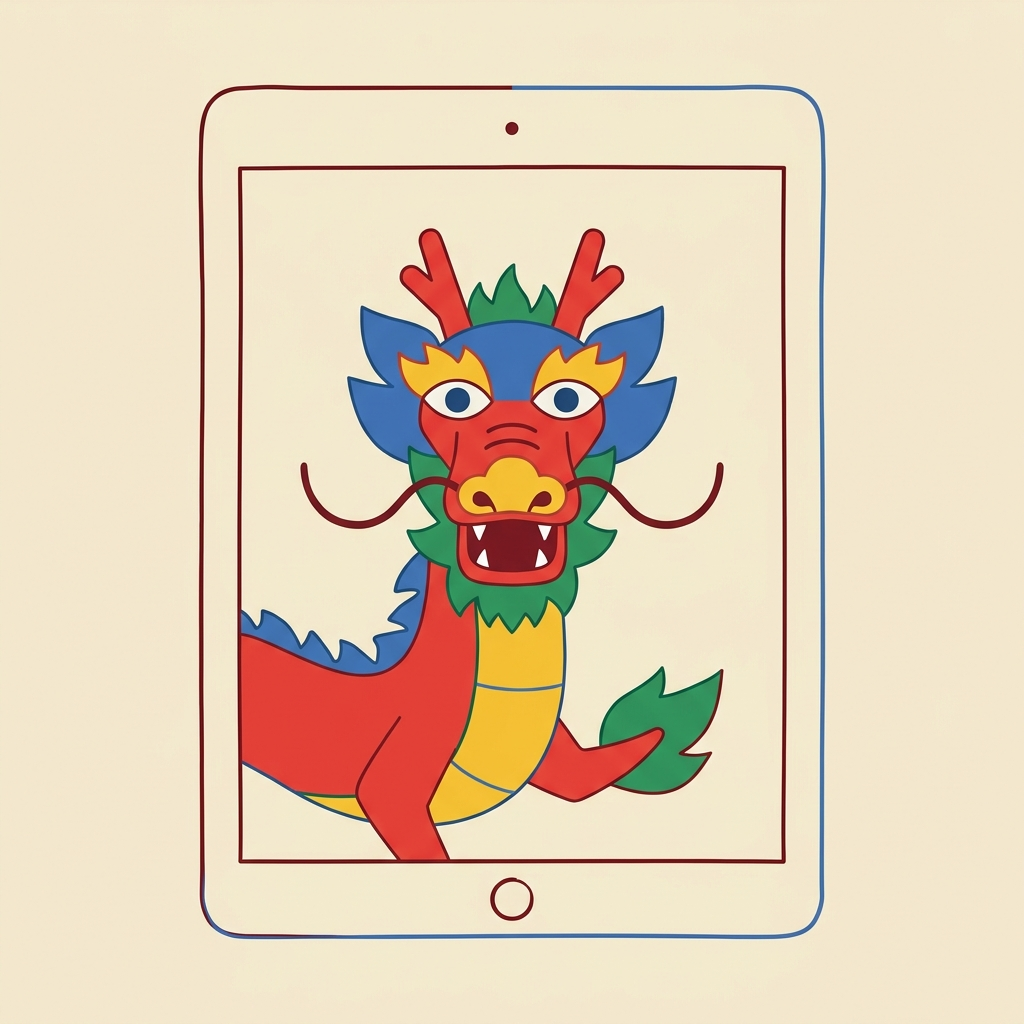
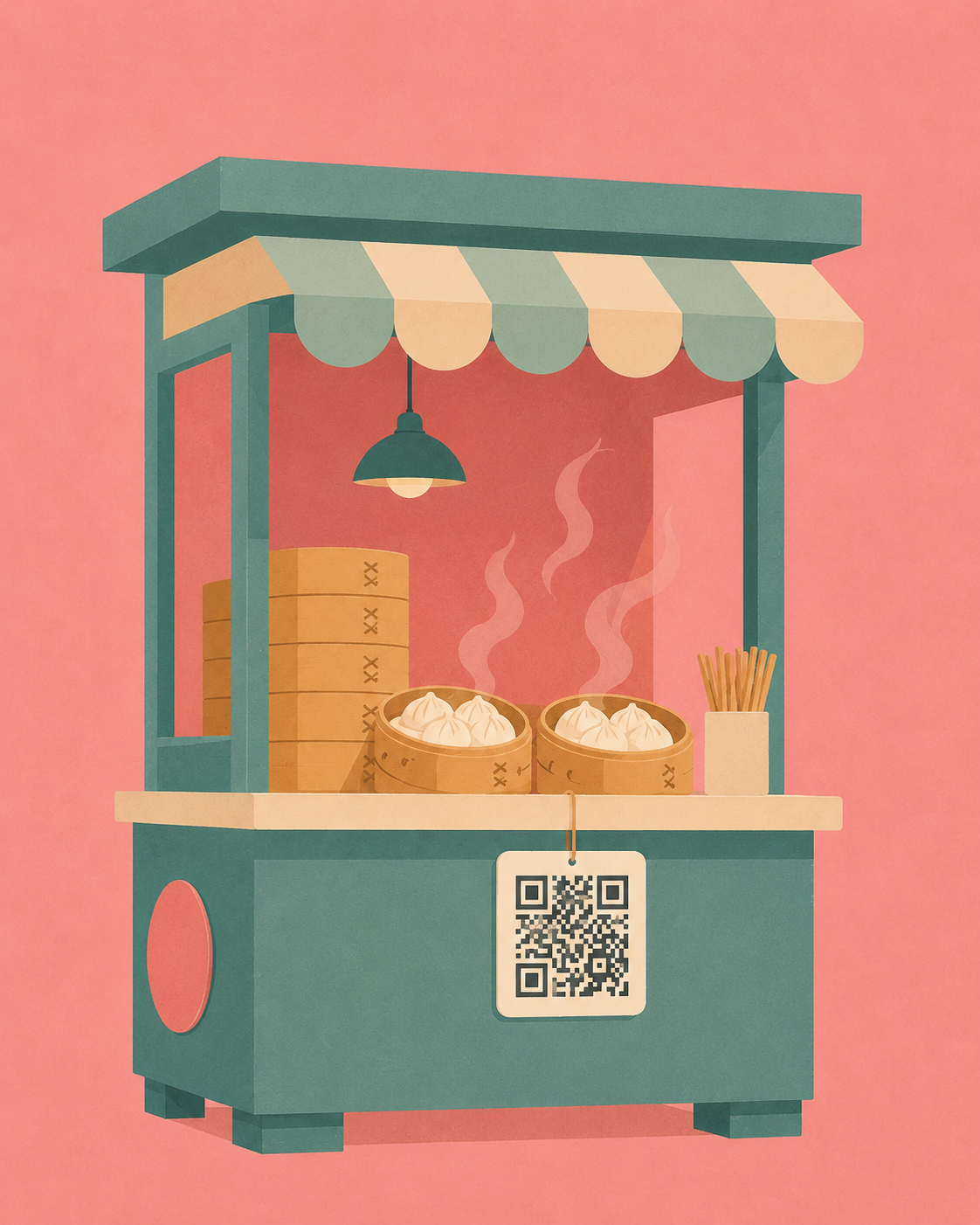
In Chinese metropolises, even the little stall selling food for a few yuan at the roadside, with a cluster of neighborhood regulars gathered around it, is equipped with a QR code for payments. Arriving in China with our habitual idea of the technological future in mind, this is what strikes you: the most advanced digital technology coexists with and sustains analog practices that unfold in space, without eliminating it. It does not sublimate them into a separate, artificial, disembodied virtual world. The young monk outside the Buddhist temple, dressed in traditional robes, nonchalantly scrolls his feed on his smartphone without disconnecting from the context of embodied spatial reality. The fish-market apprentice does the same. Nowhere is there that sense of contrived suspension of lived temporality that is typical of the ultra-celebrated old towns of our beautiful Europe, mostly turned into schedules and uninhabited simulacra, where the exotic parading of terms like “authentic” or “local” serves the purposes of the market.
A first hallucination that is challenged when you look closely at what happens in the neighborhoods and outskirts of the new Chinese metropolises is, then, the widespread one according to which digital technologies are destined to dethrone analog ones. This dualistic structure of the average Western reasoning underpins both the technophobic narrative, according to which the digital projects us into virtual worlds that would crumble the sense of reality and social coexistence, accelerating the process of environmental devastation, the machine replacement of human functions and so on; and the techno-enthusiast narrative, for which the digital is in itself capable of projecting the human into a rosy future of liberation from work and unlimited empowerment.
Note how both narratives have an elitist flip side, mostly hidden and unacknowledged. The technophobic narrative sees contemporary society with horror and effectively prefigures a class of a chosen few who will still be able to study, write, think on their own, in a world where the dominance of digital technologies would flatten the human life of the barely reflective masses. The techno-enthusiast narrative, by contrast, imagines an elite able to foresee, understand and therefore steer the changes brought on by technological evolution, while the rest of the world toils or lets itself be led.
To understand why this impression is philosophically relevant, we must return to the fundamental characteristic of embodied intelligence: its dependence on the life of the body, that is, on perception, affective memory, imagination and other functions immediately connected to the weaving of a sensory fabric made of continuous contacts between the skin, the senses – however enhanced through every kind of device – and the flesh of the world.
The carnality of our knowing and our power is both cross and delight: a cross, so much so that we are still here fighting against what is undoubtedly a condition of limitation and finitude, on which one never meditates enough; the time of Icarus and Prometheus is never over, the attempt to free ourselves from the body’s constraints, that is, from error, from limitation, from pain, from the inescapable play of life and death. But also a delight, since it is thanks to the body that we enjoy the fruits of the world, that information takes on music and color, that scientific horizons, goals for everyone, become horizons of meaning that inform political action, religion, feeling.
The facts of the world, far from being exhausted in the scientific and cognitive dimension, are first of all matter for taste: we like them or we don’t, they intrigue or disgust us, they represent a challenge, they make us dream. Embodied intelligence is at the service of this structure of desire, of the search for pleasure and intensity of life; in principle, every technological empowerment of the human retains traces of this service. It is precisely for this reason that the Chinese integration of digital and analog is interesting: it shows how technical empowerment can remain anchored to the street, to the body, to proximity, to concrete sociality.
One of the consequences of the embodied character of human intelligence is hallucination, a term today associated with the errors of artificial intelligence. The nature of the two hallucinations is nonetheless very different. Artificial intelligence hallucinates when, out of haste and the need to provide a positive, obliging output, it produces nonexistent results on the basis of semantic proximity and relevance between terms that are hypothetically, but not factually, related. The most obvious and well-known case is that of the fake but plausible bibliographies that increasingly often accompany bad degree theses done with artificial intelligence. Let it be clear: bad not because they were produced with the support of artificial intelligence, but bad because the latter’s hallucinations are left to operate freely, welding themselves to those of the thesis’s author.
And the latter are the ones we should worry about most. For a human, to hallucinate means to take as a real stimulus something that was not in fact perceived; to believe valid a statement that has not been tested; to build for oneself a cognitive and interpretive perspective in which to take refuge as in a comfort zone, denying oneself the reality test that always comes from an authentic encounter with the things and people of the world. The most widespread example is the convenient transhumanism of those who believe AI is saving them time, when in reality it is restructuring — over longer stretches — their cognitive processes.
Human hallucinations become particularly bothersome when they imprison us in the comfort zone of our convictions, leaving us soaking in a horizon of meaning we have built for ourselves out of narcissistic or group resonance, blind and deaf to the signs that would invite us to a rethinking or to one more moment of reflection.
This is where China comes back: an apt example of this readiness of individuals and groups to entrust themselves to hallucinations taken as immovable truths is precisely the understanding many Westerners have of it. Accustomed to reading it almost always through political, geopolitical or dystopian categories, we struggle to grasp its singular blend of communism and capitalism, the political and economic role of traditions we too quickly associate with the religious sphere alone, such as Buddhism, Taoism and Confucianism.
At the same time, we do not know enough about the striking transformation of its cities, while we sometimes and furtively admire the beautiful lights that cover the skyscrapers and towers of Shanghai, Shenzhen or Chongqing, suspecting that it is a glittering facade that obscures great, never-removed social ills, which we picture more or less in the same way we would have described them thirty years ago.
The point, then, is not to concentrate on the many questionable preconceptions we have about China, but to understand how its social and political evolution, in relation to the most advanced technologies of our time, allows us to confront certain Western hallucinations about the digital.
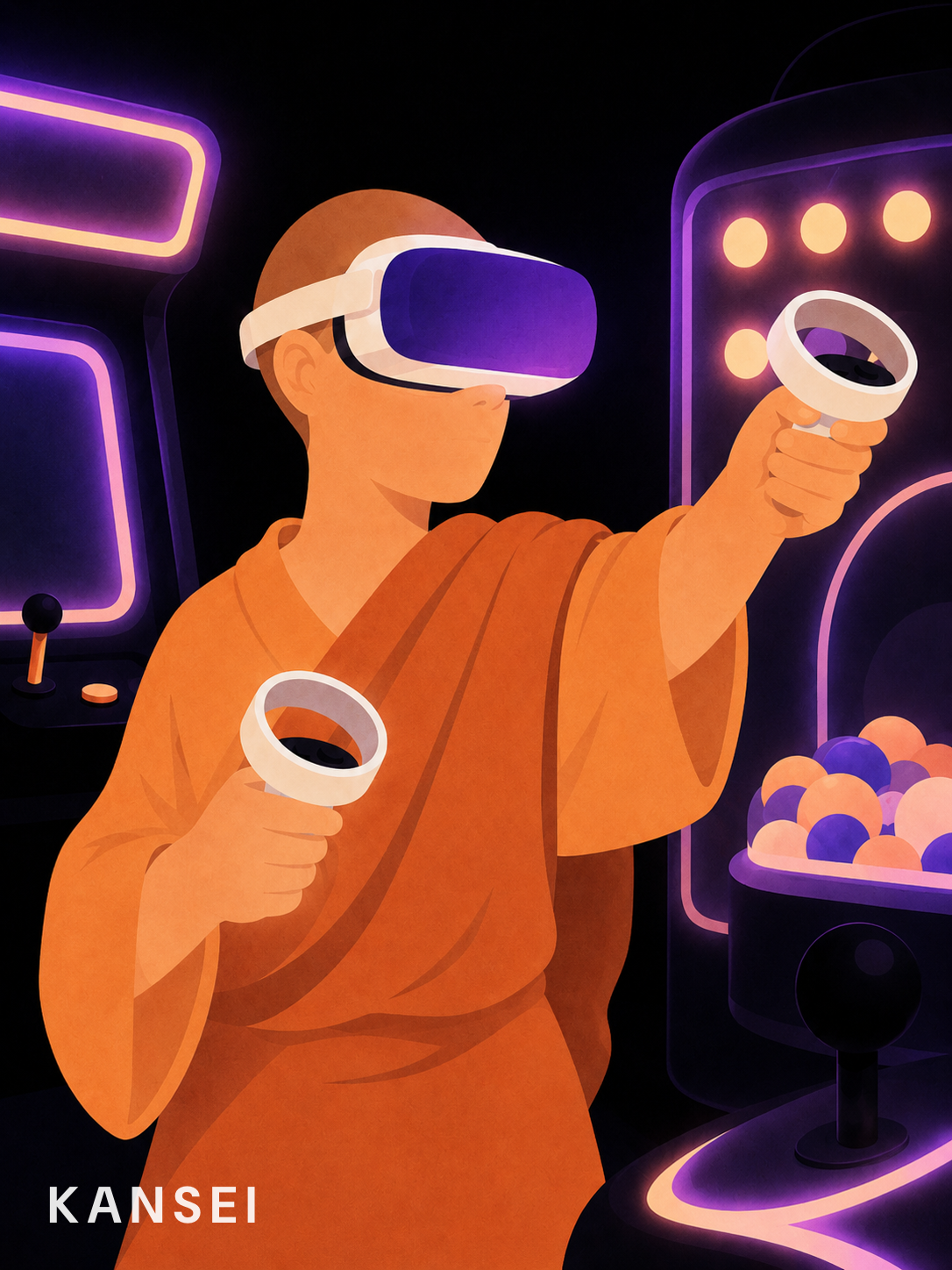
In Chinese shopping malls, for example, there are enormous common spaces: play areas where children can be left at trifling cost while the adults do their shopping. They play with modeling clay and Lego, with little trains and toy soldiers and dolls, and there are enormous tanks full of colored balls, pinball machines and wooden figures. The arcades have not been killed off by the digital: they are enormous, beautiful, full of teenagers who gather there as we did in the Nineties, to play together with virtual reality headsets and climb aboard the latest-generation simulators.
In the outskirts, the sidewalks are vast and covered in greenery. The smart-city infrastructure, extremely advanced in many Chinese metropolises, does not erase the street: it serves an enjoyment of the neighborhood that is still fundamentally pedestrian. The taste for the labyrinth runs through the park, the shopping mall, the heart of the neighborhood: you get lost among immense colored corridors, among old-style airtight doors and automatic openings or passageways worthy of the spaceships of Star Wars, just like that, seamlessly.
The taste for real space, to be crossed on foot, or by scooter, or by the hyper-efficient subways, with public services at every station and often useful nurseries, is not supplanted by the spread of technologies. On the contrary, it is precisely technology that seems to make the urban space more accessible, more traversable, more immediate. The digital does not appear as the opposite of the analog, but as its infrastructure. Not as the negation of the body, but as one of the environments in which the contemporary body moves.
Perhaps, in this extraordinary integration of technology and corporeality, in this positive but not blind conception of the human-machine hybridization, there is something to learn on our part too, as Europeans and Westerners in general. It is not a matter of adopting the Chinese model wholesale. Like every other embodied intelligence, the intelligence of Chinese culture too has its biases and its hallucinations. It is a matter of understanding what we can learn from others in order to attenuate, scale back and challenge our own biases, correcting our hallucinations.
And perhaps the strongest hallucination to correct is precisely this: to imagine that the technological future is necessarily a future without a body, without a street, without a market, without a neighborhood, without contact. China shows us that the digital, instead of replacing the physical world, can inhabit it. And that the future, if it truly is to be technological, need not for that reason be any less embodied.