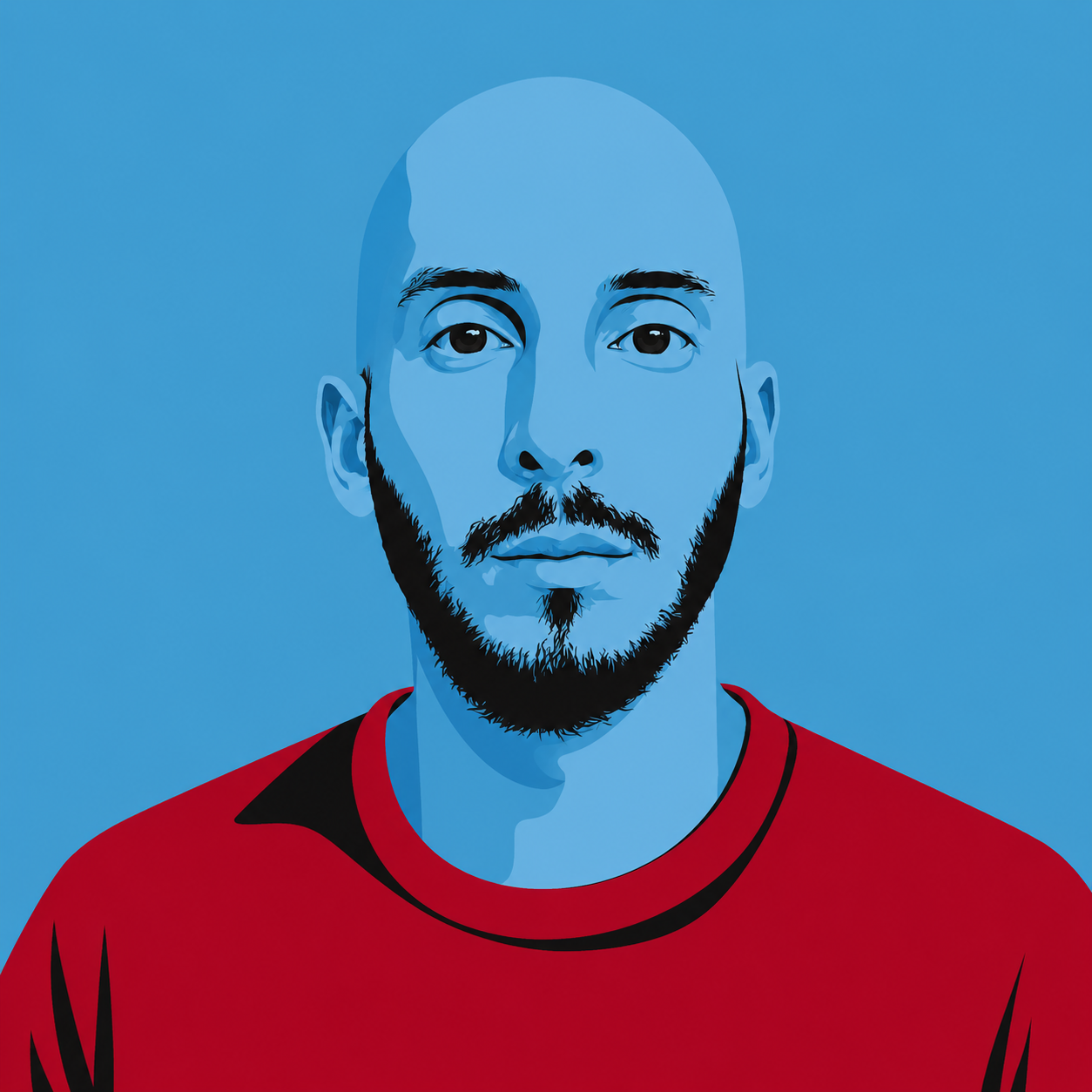
Vannacci is the perfect politician for the age: created by his enemies, fed by the talk shows, useful to the right, indispensable to the left. Until he stops being a caricature and becomes a party.
To write this article I watched an entire episode of Otto e mezzo, though three clips online would have been enough to reach a few simple conclusions. The first is that Roberto Vannacci knows how to be on television. The second is that he has the kind of look that in Italy is often mistaken for sexual ambiguity when in fact it just means that at sixty a man keeps himself in shape. The third is that Vannacci doesn’t want to be right. He wants to be told he’s wrong in prime time.
The Italian left has always had a certain talent for creating its own monsters, but it had rarely managed it with such promotional generosity. If you have a book coming out you no longer need to hope it gets censored: you need to hope Repubblica denounces it. And so Il mondo al contrario, a book that might have stayed an item passed around in Telegram groups, became a national affair. The themes were the usual ones dear to the right: the natural family, immigration as siege, too much faggotry. The bestseller became the platform of a national future, and a media sensation.
In the Vannacci-Gruber affair the game of roles is almost perfect. He lends himself to being pressed on homophobia, racism, sexism, reactionary language. She instantly becomes a meme while she rips into him: “Is he loyal?”, “He married a non-EU woman”, “How many about-turns he’s done!”, “He likes cushy seats too.” When he tells her cryptically “you like illegal migrants” she tells him not to talk nonsense. The public will share the same video clip on social media, reading it in opposite ways. The one on the left will write: “Gruber owned him.” The one who feels patriotic will write: “He flattened her.”
They’re both right and both wrong at once. Televised confrontation also works as a format of legitimation. Vannacci doesn’t have to win on the merits. He only has to occupy the role of the persecuted man. He has to be interrogated, corrected, looked at with a certain disbelief. To seem out of place in the right place. Politicians, on the other hand, like television programs, are measured in percentages.
Then we’ll get back to Vannacci, but first we have to talk about Gwyneth Paltrow.
The papers and the internet flipped out because Paltrow acted as the face of a luxury residential complex in Herzliya, an Israeli city. In the video she wakes up in a wildly expensive interior, complains that morning comes too early, drinks her coffee, goes for a run toward the park. In short, the typical problems of every inhabitant of that dusty strip of land. They called her the queen of genocide, which is still always better than fascist.
I know what you’re thinking: she’s getting a head start on Trump’s Gaza real estate project; she’s never read a newspaper; she lives outside the world, among vaginal candles and chic spiritual retreats. But just because she’s blonde doesn’t mean she’s naive.
Perhaps, and here I ask for a leap of imagination, Gwyneth Paltrow simply preferred the sponsor’s money to the approval of people who would never buy a multi-million-dollar apartment in Israel. Perhaps she calculated the risk of a borderline endorsement in a time of war crimes and decided it was worth it. She didn’t post the ad on her own Instagram profile, that is, she didn’t hand herself over to the pro-Pal twenty-somethings with dyed hair who would have explained to her that they, in her luxury building, wouldn’t have set foot.
Paltrow knows something Vannacci has understood too: the audiences are separate. A campaign that makes you look worse to one audience can strengthen you with another. The audience that hates you almost never coincides with the audience that buys you. And if it doesn’t buy, it can’t boycott. It can only get outraged, that is, work for free at distributing the content.
Paltrow sells an aesthetic-political status to an audience that probably isn’t scandalized by Israel. Vannacci sells political presence to an audience that isn’t scandalized because Gruber calls him backward.
When Gruber asks him why he seems obsessed with gay people, he replies that gay people already have their rights, they can go to the hospital, they can drive. They’re lucky people and they don’t know it. (It’s very funny that Gruber and Vannacci strain so hard to say “LGBTQ+”; does Vannacci’s audience know we’re talking about queers?).
The only moment when Vannacci really seems to get worked up is when Gruber casts doubt on his loyalty. Vannacci replies that he is loyal to his own ideals, not necessarily to the men who put him on the ticket. Then he adds that Salvini used him to grab votes, so they used each other. It would be the perfect plot for a Brokeback Mountain in reverse.
It all seemed normal to me until at a certain point Vannacci started speaking in French. It’s a concession to the audience that watches Gruber. He wants them to know he isn’t some lout in a hoodie with the names of cities printed on it, he isn’t a Fantozzi of bulldozers, soccer and mortadella. He wants to say: I come in peace, I’m respectable, my right isn’t extreme, it’s just right-wing, I even know languages. Vannacci says the same things the Italian right has said for years, only today the Italian right says them with more caution because it’s in power. I eagerly await the ad for a relais château in Israel.