
Above the White House the flag drops to half-staff for a woman who spent half a century carrying everything upward — her hair, her heels, the volume of her own legend. Dolly Parton has died in Nashville, at 80; according to her spokesperson Marcel Pariseau, after a brief illness from cancer at the Vanderbilt-Ingram Cancer Center. Hours later, Donald Trump ordered that federal flags remain at half-staff until sunset on September 1st, at the White House, on public buildings and grounds, at military sites, on federal vessels, and at U.S. diplomatic missions abroad.
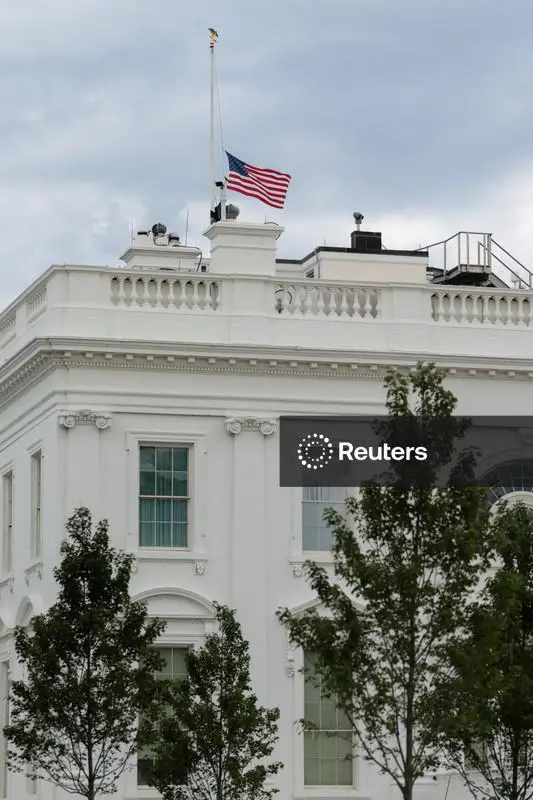
The federal proclamation measures public deference; the tributes reveal how wide was the respect Parton had gathered across different political and cultural worlds. From there emerges the existence of a figure whom worlds that are normally incompatible felt compelled to honor in the same language of respect. For an entertainer, that is a rare recognition, though not a unique one: George W. Bush ordered flags to half-staff in 2003 for Bob Hope. The exception, here, matters more than the precedent.
Parton was shareable because she held together things the present prefers to file separately. There was the Appalachian background, the Tennessee accent kept intact, a Christian faith never wielded as a cudgel, and a county-level patriotism without a snarl — enough to speak to the American right. There was, at the same time, a form of emancipation far more persuasive than a good deal of theory: the woman of 9 to 5, alongside actress Jane Fonda and actress Lily Tomlin, capable of turning women's labor into popular culture. There was also the intelligence of a songwriter who knew how to defend the worth of her own songs, a philanthropy concrete enough to become institution — from Dollywood to the Imagination Library — and for gay culture what puritanism, of whatever stripe, will never understand: camp as a discipline of personal freedom.
Every funeral polishes the bronze and widens the choir a little; mistaking that choir for a coalition would be naive. It is precisely inside this distortion that Parton's special quality surfaces. Musician Paul McCartney remembers her for her music and her philanthropy; actress Jane Fonda calls her an embodiment of empathy; Senator Bernie Sanders, in a tribute picked up by Euronews, dwells on literacy, education, LGBTQ+ rights, healthcare, and disaster relief. Everyone enters through a different door, and no one manages to close it behind them. Parton left many entrances open and no proprietary exit.
That is why her death sounds like a report on the American present. The celebrity system now produces instantly classifiable figures, useful as tribal crests, consumed at the speed a platform decides who must be outraged. Parton belonged to a different ecology of fame: legible enough to be loved, eccentric enough to escape being owned. The Atlantic read the public response as evidence of an ability to cross cultural boundaries; I see something more melancholy in it, and more concrete. The flag lowered above the presidential roof showed the same thing as the tributes that poured in from every direction on August 25, 2026: how rare it has become to have a blonde wig large enough to hold so many versions of the same country.