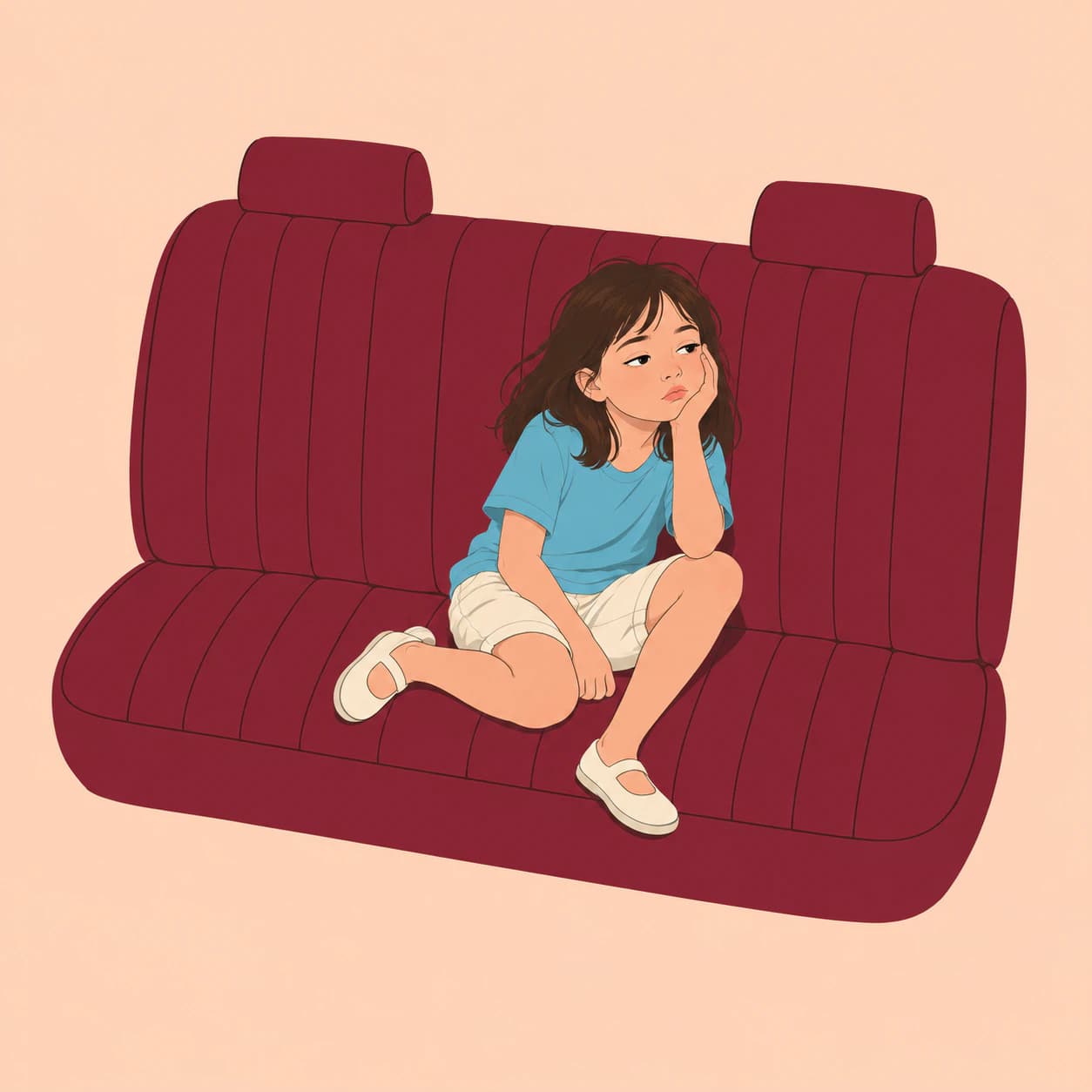
Just a few days ago I was in Calabria, at Capo Vaticano. I was in the water, in a blue-green sea, still and transparent; the day was perfect, the sun just beginning to sink, a light breeze easing the heat of the preceding hours. With some friends, we were simply floating in this bliss. Suddenly one of them says: let's enjoy this moment; in November, at this very hour, it'll be dark, we'll be under Rome's rain, stuck in traffic, and we'll miss all this.
I saw nostalgia's face before it even appeared. I understood in advance the painful meaning of a place that belonged to us for an instant, and then no longer. I suffered from nostalgia before even losing what I would long for.
I thought back to that fleeting feeling a few days later when, reading about the elections in Saxony-Anhalt and the success of Alternative für Deutschland, I repeatedly came across the question of nostalgia. The talk was of “Ostalgie”, that feeling characteristic of the former East Germany, the longing for an orderly, predictable world where you are accompanied from cradle to grave along a path free of the jolts, tugs and frustrations typical of capitalism. I wondered whether the citizens of the GDR, as they lived in that world and that moment, were as satisfied and happy as we were, floating in the Mediterranean on a perfect day.
Did the East Germans who now long for their lost homeland think they were living in a perfect world? Did they say to themselves: let's enjoy this moment; one day we might lose Erich Honecker's paternal care and find ourselves — second-class citizens — grappling with a world that isn't ours, besieged and frightened by dark and malevolent forces?
I find it hard to believe, yet my cinematic memory struggles between Good Bye, Lenin! and The Lives of Others. In the first, a mother falls into a coma at precisely the crucial moment when the GDR regime is heading towards collapse, and wakes up when the country has already entered the capitalist, Western orbit. Her children realise their mother is too fragile to bear this trauma and do everything they can to conceal reality from her. The film is a celebration of nostalgia for objects: Spreewald pickled gherkins or Mokka Fix Gold coffee are amulets of the past used to protect against a threatening present.
In the second, we have the drama of an East Berlin family penetrated by the Stasi's investigating ear: the communist regime appears here in all its ruthlessness, building around the “lives of others” a wall of surveillance and repression that exceeds even the demands of ideology and becomes absolute personal power. The minister of Culture demands that the beautiful actress under Stasi surveillance fall into his clutches, even at the cost of inventing her betrayal.
So what do the good citizens of Saxony long for when they vote AfD: the gherkins or the Stasi?
Obviously neither. Collective nostalgia differs from individual nostalgia: you needn't have lived through what you long for. Right-wing propagandists are keen to boast that AfD voters include a great many young people, many born after the fall of the Berlin Wall, rather than just melancholy, grumbling old people. The past is always a political construction, and nostalgia can simply arise from hatred of the present and fear of the future. When you have no solutions for today or ideas for tomorrow, nostalgia is the perfect refuge: it is Simon Reynolds's Retromania, remakes, revivals, reunions.
To be attractive and welcoming, to draw in as many people as possible and take them away from the progressive appeal of the future, the past must be constantly redecorated, repainted and refurbished. When the MAGA world, with Trump at its head, wants to convince its supporters of America's lost greatness, it reproduces it through the “beautification” of the capital: the ballroom, the world's tallest triumphal arch, gold-covered statues, the Reflecting Pool in flag blue. Not everything succeeds, but that's the attempt: to connect the present with an idea of a past that never existed.
On the immaterial side, the AfD does the same thing. When Ulrich Siegmund, the victor of the elections in Saxony-Anhalt, says that schools should teach “more Bismarck than Hitler”, he is redecorating the German past, beautifying it by trying to erase its ugliness and guilt. He wants all of Germany to go back to living there, shut away, alone and happy.
There is, however, a paradox in all this that makes operations founded on collective nostalgia difficult to pull off. A 1985 book by David Lowenthal captured it very well: The Past is a Foreign Country. The author takes up the famous opening of a novel by L.P. Hartley, The Go-Between: “The past is a foreign country: they do things differently there”.
The fervent German patriots don't know that to rebuild their beautiful, lost homeland and overcome nostalgia, they have to emigrate to a foreign country. All I have to do is wait until next year and go back to Calabria.
Italian journalist and radio presenter. He began his career at Radio Radicale, where he also served as director, before contributing to publications such as L'Indipendente, Il Foglio, Liberal and Il Tempo. He hosts Zapping on Rai Radio1. He lives in Rome and is completely agnostic when it comes to football.