In March, a website called PUCS made the rounds for a few days — Portale Unico delle Complicazioni Semplici, the Single Portal for Simple Complications, presenting itself as the imaginary body tasked with complicating straightforward things. It was made by Antonio Giarrusso, a digital entrepreneur bogged down in his application for an electronic ID card: there are counters that on Thursdays are open from 10:00 to 10:00, and a queue-management system that hands you a number while the counter in service is none. I lost twenty minutes on it, like everyone else who's been through it.
My eye drifted down to the bottom, below the legal notices, between the unguaranteed privacy policy and the lost site map: «Accessibility (under evaluation since 2009)». At the entrance, the welcome message promises a modern, accessible experience, and immediately clarifies that some features might not be available on devices with a screen. The accessibility statement is a real thing: public administrations and, among private entities, those offering services to the public through websites or applications with average revenues exceeding 500 million euros over the last three years are required to publish or update it by 23 September, through the AgID platform.
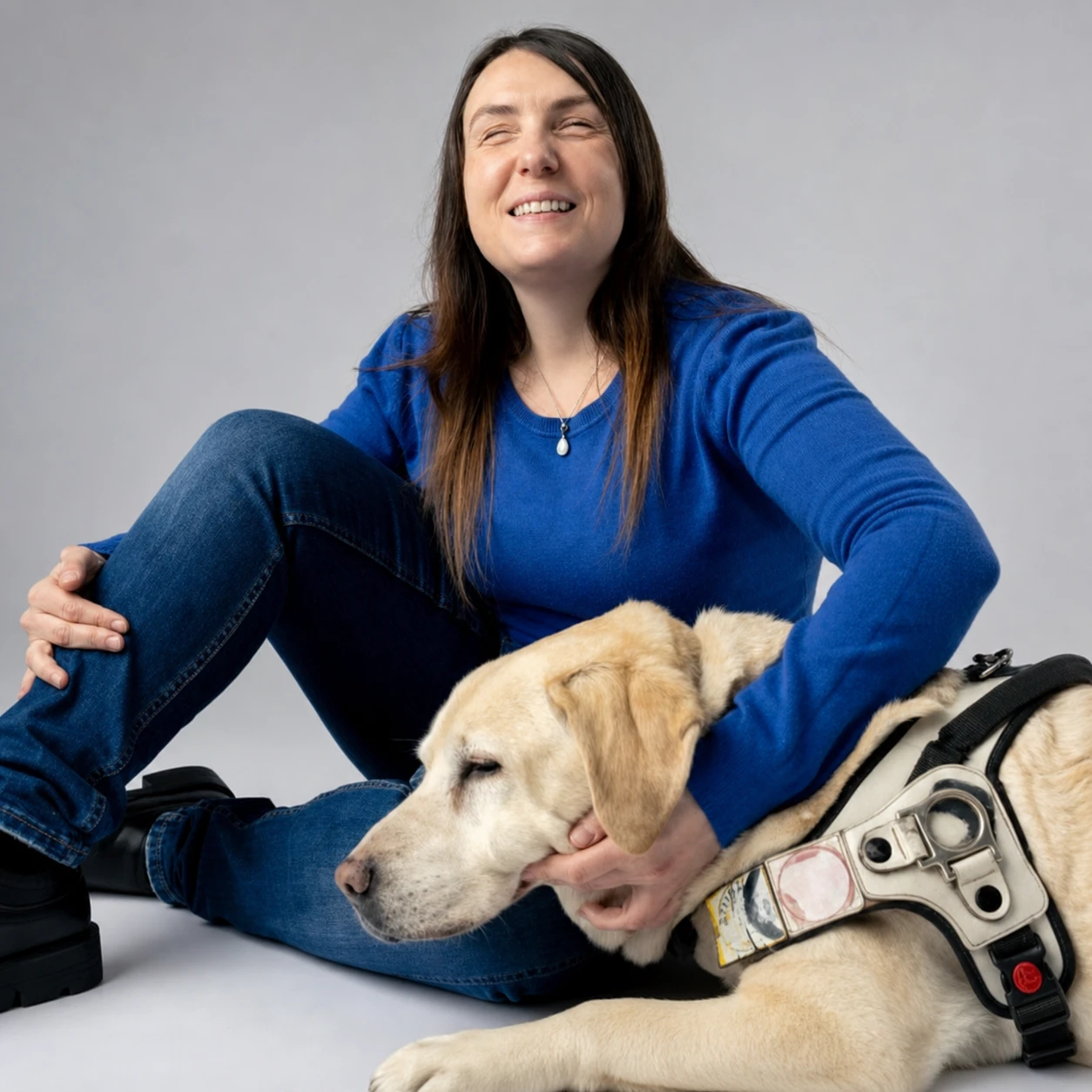
On what happens after that form, the most precise thing I've read this year was said by Dajana Gioffrè, a partially sighted activist for the rights of people with disabilities and advocacy manager at AccessiWay, a company that works on digital accessibility. Gioffrè has nothing against checklists: «I don't consider this approach entirely wrong, because it offers a method for tackling a subject that is extremely complex». The problem starts when formal compliance becomes the finish line: «We're talking about people and about how society welcomes them, involves them and treats them», and then it's not enough to «achieve regulatory compliance or obtain a certification to put on display».
2009 is the year Italy ratified the United Nations Convention on the Rights of Persons with Disabilities — the one with the motto repeated at every conference ever since: nothing about us without us. For the occasion we set up an observatory, a body whose job, literally, is to watch and write reports.
The motto, though, demands a seat at the table. Gioffrè, who has been with the Disability Pride Network for years, shifts the question further upstream: inclusion begins long before the ramp — it begins in the room where something is designed, and the hardest barrier to see is the list of people the designer had in mind. In the rooms where the rules are written, associations arrive as guests, and sitting by invitation is a different job from holding a seat by right: those who are invited bring a petition and say thank you, those who hold a seat bring their whole day into the room. Gioffrè says this from the side of those who carry the petitions: the requests of people with disabilities concern accessibility, equality, participation, and they end up being perceived «as particular requests, rather than as universal rights».
In a company, the standard body is the unit of measurement, and there is a procedure that does the measuring: the examination in which the occupational physician writes whether you are fit for the role, partially fit, or unfit, and hands the verdict to you and your employer. The role, however, was designed by someone who had that standard in mind, and when a body was never imagined, the procedures skip it: Gioffrè recounts that in the emergency room she was not asked whether she was pregnant, «despite this being a question required by procedure before administering certain medications». In her reading, discriminations «do not replace one another but accumulate»: being a woman and having a disability are not two alternative boxes, and the bill is paid for both at once.
Job listings have a line that always sits at the bottom, after the required qualifications: membership in protected categories is welcome. The formula is identical across every sector and explains itself: they are looking for a number to put in a form, inside a category that the language of Italian employment calls protected — meaning kept out of harm's way. Gioffrè offers a diagnosis of that word: part of the delegitimisation comes from a paternalistic attitude that treats people with disabilities as «subjects to be protected rather than as citizens holding rights». It's written right there in the listings, at the bottom, after the qualifications.
Higher up, in the same listing, is the description of the body they are really looking for, dressed up as a moral quality: dynamic, resilient under stress, driving licence required even for a job done sitting down. I'm thirty and until a couple of years ago I thought those words described an attitude; then I read through CVs beside a colleague in HR who kept repeating we need someone who won't stop, and I understood how much they weigh.
The 1999 law allows, under specific conditions and through a partial exemption, for a portion of the reserved quota to go unfilled by paying €39.21 per working day for each position not filled.
Meanwhile, the company communicates: the post where hiring a person with a disability is framed as a nice thing the company did, the diversity slide in the investor presentation. Gioffrè describes the pattern those contents fall into, and it has a technical name, inspiration porn: the representation stays locked inside «an extreme dichotomy: on one side the "superhero," on the other the "unfortunate" person, with no room for all the nuances that exist in between». The implicit message, she says, is «if a person with a disability managed it, then I can too» — a narrative that «completely erases the person's uniqueness, their story, the context they live in, the opportunities they've had, and the obstacles they've had to face». Missing is the part about the colleague who does a boring job, gets a quote wrong, and asks for a raise at the worst possible time of year.
The reserved parking space painted on the ground is the cheapest proof of all. You stop for five minutes with your hazards on, knowing what that symbol means, and treating it like a discount given to someone who isn't there right now. The same applies on an urban scale with the plans for eliminating architectural barriers, which the law has required for decades and which municipalities have adopted patchily. Everything is done without malice, with the priority hierarchy learned in first grade, where the classmate with the support teacher was the support teacher's business. You come out of it convinced that an accommodation is a favour, and a favour can always be taken back.
On one point Gioffrè puts me in a difficult position, and she's right. She says that social media has made visible discriminations that used to stay on the margins, "accessible squares" where one person's experience becomes everyone's concern, and that the flip side is "focusing on the reaction to individual episodes, instead of addressing the structural causes of discrimination." This piece started from an episode, a satirical website that circulated for three days. The way I found to not stop there is the documents: the AGID form with its own term, the article that sets out how much it costs not to hire someone, the suitability assessment, the Constitution at the first of four votes. Structural causes, in Italy, all have a protocol number.
Elsewhere, cases get closed. At the start of 2024 Spain amended its Constitution to remove one word, disminuidos, the diminished, and replace it with people with disabilities: both chambers voted on it between January and February, almost unanimously. Ours, at article 38, still speaks of the unfit and the impaired: in 1947 these were the ordinary words of public documents, and time has made them heavy. The process to change them is open — the Treccani has called for it, as has the Senate's Committee on Constitutional Affairs. The Senate's Committee on Constitutional Affairs completed its examination unanimously and the text is awaiting the chamber's first reading. A constitutional revision requires four parliamentary votes: we are still before the first.
It is improving, it must be said. There is an observatory that publishes and an independent Authority that since January of last year has been working from a premises which the founding decree had to specify as accessible; there are European directives with expiry dates, and a few companies that worked out before the rest that the diversity of their customers is an accounting fact, not a moral stance. On everything else Gioffrè has a line I'm lifting out of context and taking home: since he has lived without seeing anything he has learned that people are curious about disability, «but would never want to find themselves living it». It is from that distance that a right gets read as a favour. What he asks, to get out of that distance, is to pair the indicators with «an assessment of the quality of lived experience» — at work, at school, in services, in cultural spaces. In the meantime there are two dates: on 23 September we declare what we are made of, on 31 January we declare how many we have not hired. In between, the assessment goes on.