I imagine you all know that line from “Il ragazzo della via Gluck” where Celentano sings, heartbroken: “Where there was grass there's now a city, and that house among the greenery, where can it be now?”. Well, perhaps the millennial version of that nostalgia for when we were young and the grass was greener would sound something like this: “Where there was a village built in amateur HTML there's now a metropolis governed by Meta's algorithms, and that MySpace profile with the indie song that played automatically, where can it be now?”.
It occurred to me while I was trying to get back into my MySpace account: although I'd signed up with my old Hotmail email address, which is still active, I couldn't log in. Searching by username, though, brought up a little grey square with my first and last name in black and a notice saying the profile was private: I could only see it by logging in. If I could get in, what I'd most want to discover is whether anything is still there or whether that piece of my digital youth has been lost entirely.
In 2019 the platform confirmed that an enormous amount of data had been lost because of a problem during a server migration. For music, the figure mentioned was over 50 million tracks, uploaded between 2003 and 2015, vanishing overnight. Unlike other virtual places, MySpace has practically been razed to the ground, without even ruins left behind. Forums have survived as ghost towns of the old web: depopulated, inhabited only by ghosts wandering through the scaffolding of dead discussions, but still recognisable. Something of the Splinder blogs remains too, traceable through the Wayback Machine, but of MySpace there's nothing, only a few screenshots saved by users and discoverable on Google Images.
So I'll have to rely on memory and nostalgia for that period, brief as it was. MySpace's peak popularity ran roughly from 2005 to 2008, but on the internet time is relative and one year counts as ten. I seem to remember it wasn't that successful in Italy: it was a social network closely tied to nightlife, with the connection between the real and virtual still strong.
The first thing you saw when you opened it was “the bulletin board”, an idea later copied by Mark Zuckerberg, which you updated by manually reloading it, bursting with announcements of where to meet that evening: DJ sets, concerts for at most thirty people in some basement, themed nights, “vintage” and “indie” parties, or gigs in bigger venues by artists who were finding their popularity on MySpace itself. It was more for hipsters than nerds: beyond the famous and infamous emo subculture, it was fertile ground for many other communities, subcultures and musical movements that defined internet aesthetics, visual identities built from assemblages of images, colours, fonts, photographs and cultural references which would explode in the following years, first on Tumblr and Pinterest and, in other forms, on TikTok and Instagram.
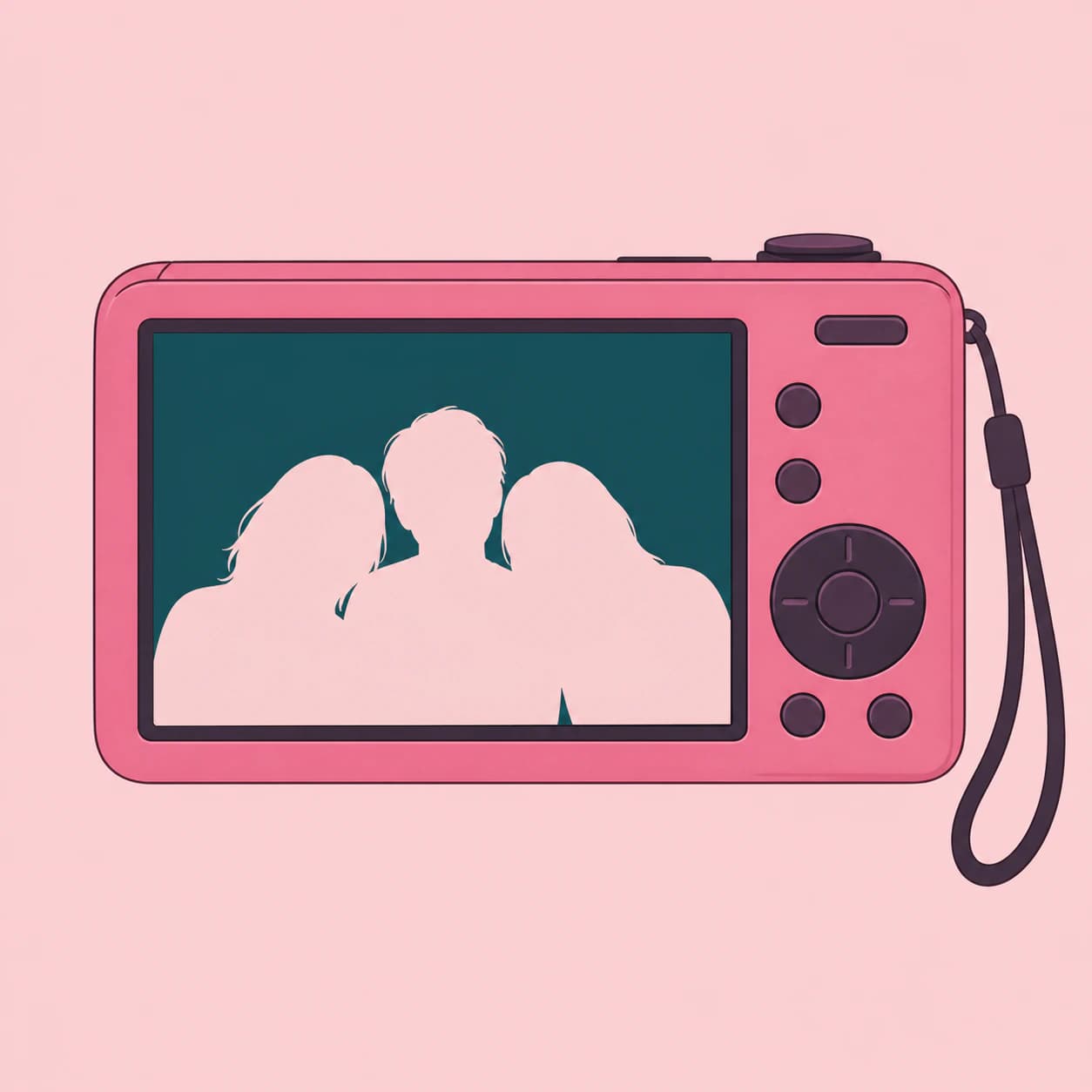
MySpace's existence was inextricably linked to another Y2K fetish: the compact camera. The typical MySpace user, whether emo, raver, metalhead or indie, was someone who posed and took selfies alone, but more often in pairs or groups. We weren't yet monads with a smartphone in hand and followers: we were people who went out into the real world with a group of friends, then went home to tell the story online through photographs. Of course, the most successful profiles belonged to girls. We were still a long way from Instagram Face, with influencers' faces increasingly standardised and modelled on Kylie Jenner and Kim Kardashian. MySpace girls, by contrast, were varied, multicoloured, often deliberately eccentric: in a way, they were the living representatives of their aesthetic. A profile wasn't just a way of saying who you were; it was a way to construct and visually display your cultural tastes and style.
My favourite was a girl with a black bob, very pale skin, eyeliner and red lipstick, in the style of Karen O, the Yeah Yeah Yeahs singer. Leggings ruled, often paired with colourful orange and turquoise microdresses. Our photos, uploaded one by one into rudimentary online albums which nevertheless already allowed tags, hinted at the size of our collections of headbands and big hard-plastic bangles. There were trends to follow, certainly, but then everyone went their own way, even against the trend. You could start with indie sleaze and end up with a Sixties look, then begin going to revival, ska or mod nights, wearing miniskirts and Fred Perry polo shirts. There wasn't yet the idea that you had to belong to a precise, recognisable aesthetic, constantly prove loyalty to a fandom: aesthetics were more fluid, mingled with each other and, above all, changed along with us.
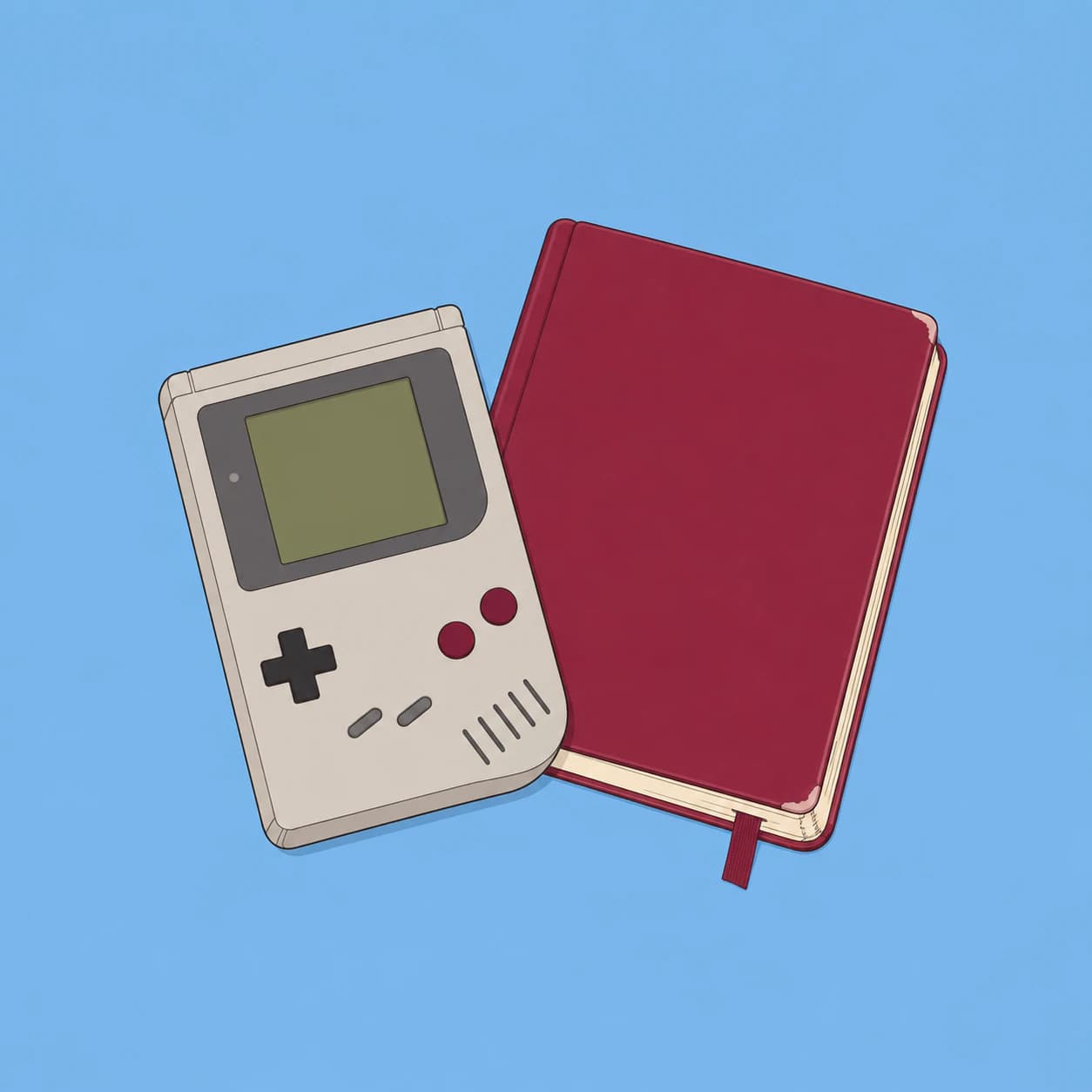
The other Y2K fetish was the iPod. We were effectively already young “augmented” humans, except that the external exoskeletons hadn't yet been condensed into a single device. For instance: I went around with a Motorola Razr (fuchsia), an iPod (fuchsia), a Moleskine (fuchsia again) and, finally, a camera (pink, only because I hadn't found a fuchsia one). As a newly minted friend of pink (the “Amiche Pink” are a current TikTok community), I'd decorated my MySpace profile background with vintage-style wallpaper, but pink all the same. After all, a MySpace profile was a kind of personal mini-site, which you could customise far more than today's social profiles. Beyond the central panel, you could add two side columns and fill them with text and images devoted to favourite books, TV series, films, personalities of the moment: a patchwork of references that, taken together, defined your personality at that precise moment and, above all, how you wanted other people to perceive you. My profile had a photo of Paris Hilton, the Y2K it-girl, dressed as a nineteenth-century lady because at some point she'd been invited to a ball in Vienna; I'd also added a photo of Lady Diana, a particularly ugly cover of Lolita, a photo of the Beatles and the Libertines, to make my musical tastes clear. It was a kind of self-portrait by accumulation: you didn't say directly who you were; the content you chose to surround yourself with did it for you.
And then there was music, the community's true gathering point. It is no coincidence that in the following years MySpace would try to reposition itself as a platform devoted to musical entertainment, turning one of its most loved features into the very heart of the service. Even today the platform presents itself primarily as a place to discover, share and listen to music. A great many artists who would later become famous found visibility and an initial audience on MySpace: from the Strokes to Franz Ferdinand and Amy Winehouse. And then there was Adele, whom I remember discovering on MySpace before she even released her first album. Adele's story is indeed fairly emblematic: in 2006 a friend uploaded a three-song demo she'd recorded for a school project; that material caught XL Recordings' attention and helped her secure a record deal. Her debut album, 19, would only arrive in 2008. Discovering music before everyone else was exciting. It was a small form of prestige: you could say “I already know her” when nobody had yet heard of that artist. The same went for gigs: going to see someone at the Circolo degli Artisti playing to a few dozen people who, perhaps, a few years later would become famous and mainstream. It was like witnessing something in advance that you didn't yet know would happen, but perhaps sensed would happen anyway.
Other quotations on my MySpace profile: “A stylish girl in the riot”, from a Ting Tings song, perhaps anticipating that subsequent wave of feminism which, a few years later, would become all too performative. And “We wear the same clothes ’cause we feel the same”, from Blur's End of a Century. Thoughts on aesthetic identity politics while I tried to understand what my identity was, or perhaps I was just trying to find a boyfriend. Anyway, in the end I found my husband on MySpace: he was the drummer in one of the bands we went to see. I asked him what had attracted him to my profile. First, I was among a friend's “top friends”; then I'd chosen a good song, rhythmic and fun. And this was another of MySpace's great peculiarities: if someone landed on your profile, they were practically forced to listen to your chosen song, because it played automatically. I think mine was Nur Ein Wort by Wir sind Helden, but I'm not sure, because I changed it often. Perhaps it was Victoria by the Kinks. The profile's soundtrack, too, was part of the self-portrait.
Those of us born in the ’80s and ’90s often tell one another we were the last generation to see the before and after. Of the internet, that is. The real world was taken away from us and, in exchange, we got a place to reproduce nostalgia and visualise memories. And so nostalgia became a character trait of our generation, so overgrown that its comfortable blanket could even accommodate experiences far beyond those we actually lived through. At some point, because we'd had so many experiences on the internet, we became nostalgic for the internet too. Perhaps this is the real Y2K nostalgia: less a longing for a specific historical period than for a different way of being online. Precisely because it is an immaterial place, the internet has a landscape that can change suddenly and without warning.
Platforms can close, interfaces be updated, algorithms changed, entire pieces of that digital landscape erased or replaced overnight. What we've lived through online, in other words, can disappear at a speed unimaginable in the real world. And perhaps that's precisely why we keep looking for those old photographs, blogs, forums, profiles that no longer exist: we're not just looking for our younger selves, but for a digital world in which we were young. One of the internet's vanished places, the one I miss most, is MySpace.
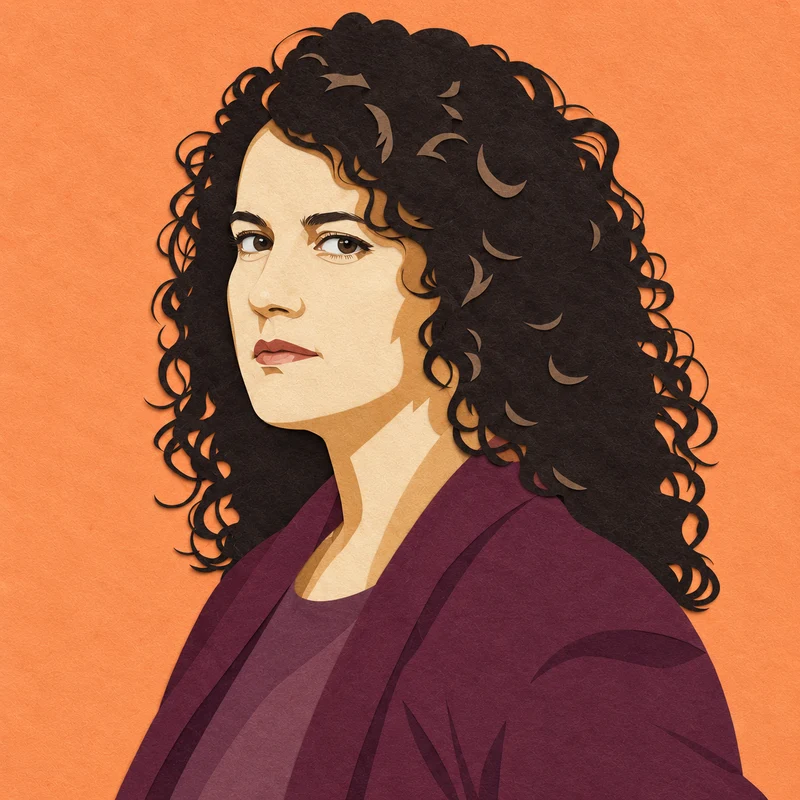
She has worked for more than ten years as a digital communications expert for national and international brands. She focuses on digital society and web analysis. She writes about the internet and pop culture, influencers and the creator economy for Rivista Studio and other magazines.